rotban

Monday, June 04, 2007

Cinejapan 1: Sunshine after the rain


Without a doubt, Akira Kurosawa was one of the greatest and most influential auteurs of cinema, having revolutionized the medium in several ways (with the help of his longtime crews, actors and staff,) either through storytelling, cinematography, or even the usage of music.

In 1999 Takashi Koizumi, who had worked as an assistant for Kurosawa as early as Derzu Uzala, and had served as an assistant director for some of his last great epics like Kagemusha and Ran, directed a movie based on one of Kurosawa’s scripts, as a tribute to the director. The title was Ame Agaru, or “After the Rain.” With a cast of actors who had been in previous Kurosawa movies, especially from that of his last moviemaking period (where he usually sought foreign financial backing for his films) the movie ultimately turns into a very light, introspective yet simple film, reminiscent of both the master’s early years and of his last.


Ihei Misawa (Akira Terao, Dreams, Ran) is a ronin (masterless samurai) who wanders the land along with his wife, Tayo (Yoshiko Miyazawa, who was Lady Sue in Ran) one day they are stranded due to rains and forced to settle inside an inn until the rain stops, where other villagefolk are staying. There, Ihei risks his own honor as a samurai (by prizefighting, which is banned) to give food to the people and to make him happy. By this time, the Lord of the domain, Lord Nagai (Shiro Mifune, son of Toshiro Mifune) learns of a skilled ronin and invites him to become his sword fencing teacher.

The acting is solid – Akira Terao is humble, kind yet skilled with the sword – compare this with the samurai of the fiefdom (and Kurosawa’s similar treatment of the samurai character in Yojimbo and Sanjuro – unrefined, gruffy, yet honest and wise to the world, quite different from what was then the conventional image of the samurai.) Shiro Mifune is also solid, showing some of the brazenness and the intensity of his father.

Other Kurosawa veterans are also in the movie in supporting parts, notably Tatsuya Nakadai (take your pick!) and Mieko Harada (who was unforgettable as Lady Kaede in Ran) Hidetaka Yoshioka (Madadayo) among others.

The music is simple and is reminiscent of sountracks of previous Kurosawa films. They do not get in the way of the film, but help enrich it.

However, despite being in the spirit of Kurosawa, Kurosawa’s eye for the picture, the way he treated each shot like a painting (hence his superflat cinematography in most movies) is not here. That in itself is good, as at least Koizumi is not imitating Kurosawa, but treating Kurosawa material like his own.

The message of the film is simple, and basically the movie’s tone gives you a warm feeling inside, a message of hope. In one of the last shots of the film Ihei and Tayo look into the vast sea, illuminated by the sun. After the rain, there is indeed sunshine.

Love Story x 2


… I honestly cannot think of a good title for this one.


A few years ago a novel came out in Japan. Called Socrates in Love, it eventually became a bestseller among millions of Japanese readers, beating the record of one of my favorite Japanese novels, Norwegian Wood. It was a simple enough story of love and moving on. It was nothing too highfalutin, the novel was simply a tale of pure love. Now if you’re as jaded about the whole love thing as some people are, you’re better off passing on this.


Soon two movies came out adapting the material: a rather faithful Japanese adaptation with Kou Shibasaki (Battle Royale) and a later Korean remake of the movie starring Cha Tae-hyun (My Sassy Girl) and Song Hae-gyo (Endless Love.) Although both borrowed from the same source material, both movies approach the material in so very different ways. Don’t worry melodrama lovers, both are reasonably enjoyable.

Let’s start with the Japanese movie first. Crying out Love in the Center of the World (the title comes from the Harlan Ellison short story) is the story of Sakutaro, a man who comes back to his old hometown. He is going to get married to Ritsuko (Kou Shibasaki) but as something in his life seems incomplete. He seems to be searching for something elusive in his life: closure. After finding a bunch of cassette tapes in his old room, he begins to reminisce about the past and his first great love, Aki. As more of the plot unfolds we get to see how this girl changed his life.

The setting of the flashback scenes is Japan in the 1980s and the film does a decent job in portraying the era, the music and the sensibilities of the time (even old school Walkman players!) Add this to the great cinematography of the film, showing lush yet low key hues (lots of blue in there) in the present day scenes, and ordinary hues in the flashback scenes, yet often with a light-saturated feel, especially in the later scenes, evoking the pictures of, say, Shunji Iwai.

The theme of the movie dwells not only on how Sakutaro is striving to let go, but also how he is dealing with his fiancée with that context in mind. Compared with other Japanese Melodramas, the film fits in well. The mood of the film is somber, lacking the weirdness of some of its Japanese brothers, or the general wackiness or slapstick of its South Korean cousins. It is in this quiet that we feel the most emotion, the grief of a past love, the void left by one’s longing for someone, the experience of one’s first heartbreak. Many will find the pace slow, but this pace, in my opinion, is deliberate; as one’s emotional journeys are never fast.


The South Korean take of the movie, My Girl and I, is an entirely different take of the source material, although both films reproduce the same scenes. A number of big names were involved with the project; although Jeon Yun-su (who helmed the cinematic flop Yesterday) was directing, the touch of screenwriter Kwak Jae-young (famously known for directing My Sassy Girl, Windstruck among others) is definitely present. As stated before, the movie stars Cha Tae-hyun (My Sassy Girl) in the male lead, while Song Hae-gyo (best known in Korean Dramas in the first season of Endless Love) who give a good performance. May I also say that she’s quite gorgeous. Being in their twenties (I think) wearing school uniforms for high school students seem really weird to me (especially after seeing Cha Tae-hyun don one in My Sassy Girl.)


Kwak’s unique brand of situational/slapstick humor can be found early on in the movie; which is a common plot device in most Korean melodramas – soften em up before going in for the kill. When the tears do come, the movie will squeeze you for it with all it has.


With respect to mood, the movie feels much lighter than the quieter Japanese counterpart; whether this is a better interpretation or not is entirely on the viewer’s hands. We are introduced to the characters not through death (in the last film the first reminiscence scene was during a funeral) but by something else. The movie also cuts the fiancée subplot that was in the other film.


The theme of this movie is not as much focused on letting go as the Japanese adaptation; rather it is a fond, yet bittersweet reminiscence of a first love. There are still elements that do suggest Cha’s character as one seeking resolution, however, so it’s not entirely different. Thanks to its more conventional tone, it seems more accessible to the casual Asian romance fan than the other film.


In any case, love and life are both fleeting. Both movies teach us, or warn us to seize the day and treasure every precious memory you have to the fullest.

Saturday, January 06, 2007

Present Confusion Awards 2006

Welcome back to the Present Confusion Awards!! It’s been a drought for me and cinema as a whole, having seen far less films over the past few months, but there’s still a measure of good films seen over the past year. Not much arty art films as last year, so there’ll probably not be as much a feature for that as before. The greatest disappointment for myself is the reduced number of local films seen. I’d have wanted to see something from the Philippines, but, alas, there was no time.

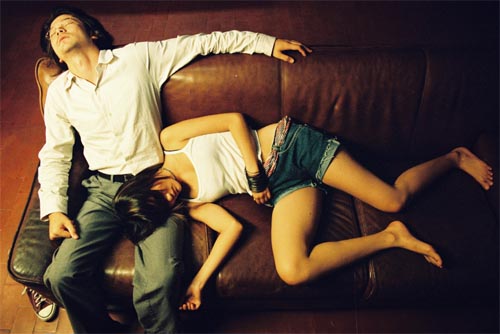
Best Watched Movie of the Year: Last Life in the Universe

sleeping on couches: bad for your neck...

I’ve been waiting to watch this movie for a very long time. When I finally saw it, what I saw was a revelation. Brilliant acting from both leads, and a great story that crosses the line between fantasy and reality. Plus, Christopher Doyle, which is pretty much icing on the very delicious cake. Shows us that cinematically Thailand kicks our ass.


Runner-up: Sympathy for Lady Vengeance

Last of the Park Chan-wook vengeance trilogy, and, in this writer’s opinion, a fitting thematic end to it. This deserves a spot in here. This is the most straightforward of the three films yet proves equally unsettling, and evidence of a maturing style from director Park. I hope to see more of his movies in the future.

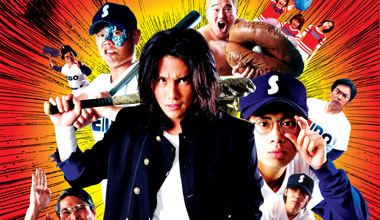
Best B-Movie/Guiltiest Pleasure Award: Battlefield Baseball

Hmm...


This category had no contenders for a very long time, I admit. Who knew that at the very last day of the year this sprung up on me like a coiled viper. It has all the insanity of Japanese Comedy AND THEN SOME. Zombies! Characters reviving spontaneously AND changing appearance! An applause track walking in at inopportune times! RAMEN! Truly something that can only be made in Japan.


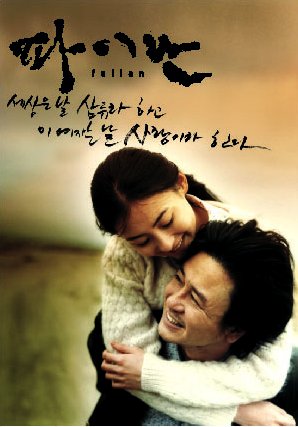
Best Romantic Film: Failan

Over all the formula and sugar of this year’s disposable romantic films comes this diamond in the rough. It is a story of two people, falling in love yet never physically meeting each other. It is a simple story, yet it can devastate you with the way it shows us its characters. Add great acting to that and you get a sure winner.

Asskicker Award – Tak Sakaguchi (Battlefield Baseball)

Who can kill a guy with a baseball pitch? He can. Well, in the movie, anyway.

Asskicker Award – Female Category: Lee Young Ae (Sympathy for Lady Vengeance)

"Lord, please unglue my hands... they've been like this for months!"


She may not have the physical prowess of the others, but she does vengeance in style.


J-drama of the Year Award: Gokusen

kicking ass with style... and great hair

Sure, it’s formula all the way, but it’s pretty endearing and it teaches life lessons too. Plus it’s really funny. It’s easy to pick up and quite addicting once you get hooked. It’s an instant classic in j-drama and one that no one should ever miss.


J-drama actor of the Year Award: That guy who played the evil coach in Attack no. 1

I choose him because from the start you know he was really a creepy evil bastard, and he showed it every time he dragged some poor soul out of the training area. Plus, he’s unrecognizable from his other roles, specially with that beard on.


J-drama actress of the Year Award: Rosa Katou (Dance Drill)

Rosa-chaaaaaaaaaaannnnn!!!! \(^_^)/


Just because I can.

MUAHAHAHAHAHAHAHAHAHAHAerm…


Runner-up: Aoi Miyazaki (Junjo Kirari)

I guess the frazzled look is in this year...

Aoi Miyazaki is a phenomenal actress; she was in my favorite short this year from Inu no Eiga, and recently in Suki da. Her performance in NHK’s 2006 Asadora Drama (Daily Morning Drama, like for housewives) was so good it gave them their best ratings in a decade. I hope to see more of her in the future.


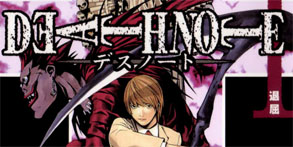
Manga of the Year Award: Death Note

we had to put in the title... you know, just in case you mistook it for shounen-ai between that guy in the middle and the freaky thing beside him... no that was a lie...


Quite well written and astoundingly clever, this manga is quite an addiction, although dreadfully short. Who knew that reading through lines of dialogue could be exciting?


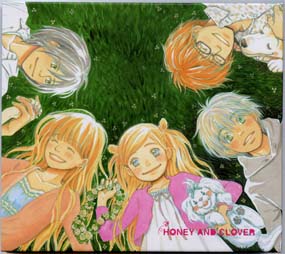
Anime of the Year Award (Finished): Honey and Clover


This anime is the little surprise of 2006. It’s funny and heartbreaking and bittersweet all at the same time. The last episode of the second season broke me like a twig.


Runner-up: Mushishi

Although episodic, this fantasy/light horror anime is quite good and surprisingly deep, and asks a lot of questions about ourselves and why we are the way we are. This anime is different from 99% of the anime out there, a true gem in the sea of anime.


Anime of the Year Award (Unfinished): Death Note

Basically they adapted the manga faithfully – and that’s a good thing.

Well, that's about it. See you folks next year, hopefully with more movies!

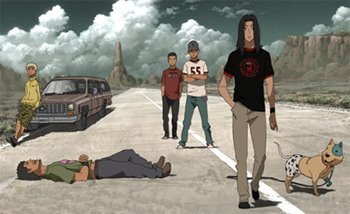
Maybe on Earth, Maybe in the Future

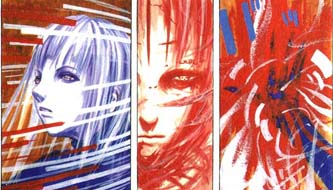
Having recently finished Tsutomu Nihei’s masterpiece, Blame!, I wanted to talk a bit about the various aspects of the world Blame! takes place in. They’re just comments about the manga and are not necessarily part of the manga canon. The following discussion contains spoilers on the story of Blame, so if you wish to read the manga and haven’t done so, skip this entry of mine until you’ve read it.

Here we go.


Beyond people

In the lower levels of the City where people still live, time and physical constraints have separated groups of humans from each other. This has led to a branching of peoples and the creation of human sub-species, some so radical that they become transhuman, no longer attaining human form. Some radical evolutionary (or devolutionary) branches of the series may be the organic creatures we encounter later in the series, or in the spear-wielding ‘skivvies’ that we encounter in the earlier volumes.

Through centuries, maybe even millennia of natural selection, humans in different levels of the City develop different traits. The Electro-Fishers are noticeably short - a dwarf race of humans, while the race where Cibo comes from is noticeably taller than the rest of them (and even then, one of the races that Killy encounters earlier on is taller than even himself.) Varying levels of gravity in the City may have influenced this.

(Ironically, it seems that the Planters, people inside Toha Heavy Industries, were of normal height, indicating a possible Earthlike gravity inside THI and a higher gravitational pull outside THI, where the Fishers live.)

It can also be said that the Silicon Creatures are a special offshoot of humanity, breaking through the barrier of purely organic evolution into something techno-organic. In one of the alternate realities of Blame! the Silicon Creatures have evolved into newer models; it’s not a long shot that the Silicon Creatures of this world may evolve along the same lines.

And there is a third possible line of evolution – transcending physical form and evolving as data. Personally I cannot fathom to what lengths a data-form can become when it evolves, since I know data is currently static, non-evolving unless converted into something else forcefully. But maybe in the future the time will come where data itself can evolve into new data. Of course, I think that along with that, hardware and software will also evolve to adapt to the new data, or vice versa.


The Netsphere

In the world of Blame! the Netsphere is a utopia of sorts, a place for the chosen few – and also a place where one can control base reality. It is also a place where people exist as data, connected via some sort of interface. In the manga, the type of interface is uncertain, but it seems to be a direct link to the brain (with the Net Terminal Genes as a method of authorization) or a transference of one’s personal data.

The Netsphere is the Eden of the Blame! universe. The Safeguards prevent access to it; the Silicon Life have the same purpose, for different reasons (for a human in the Netsphere invalidates the Silicon Life) and some, like Davinelulinvega, wish to access it, even if it is forbidden.
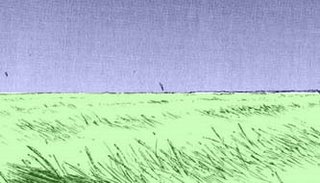
It seems to me like the Netsphere is an insanely advanced version of the Internet. Virtual worlds like this have been postulated before in science fiction works.

What if the Netsphere is an Omega System, and base reality is merely simulacra nested within an even larger virtual reality, and our tangible reality may not exist anymore? It would explain a few things, namely how the Netsphere manages to control base reality and the immense logistical requirements needed to create something as gargantuan as the City. It would also explain how structure conversion towers and Safeguards manage to manipulate matter.

Well, maybe that’s thinking too much into it.


Megastructure

The structure where Blame! takes place is postulated to be a huge, layered Dyson Sphere, whose dimensions are approximated to take it to at least the level of the orbit of Jupiter (!) this fact alone makes the City hundreds of millions of miles in diameter. Some have thought that the materials needed to construct something of this magnitude would encompass several solar systems. The number of levels of the City may number in the millions, although as the levels go higher, the space it occupies also becomes larger, thus, only a few levels may exist. It has also been theorized that the construction of the Dyson Sphere has completely used up the entire planet Jupiter, if not the rest of the planets as well, including Earth.

It may be possible that the City is not a complete Dyson “Sphere” in the perfect sense; it may be that the sphere “grew” out of Earth and involved itself around the Sun in a different way, a Dyson “Wedge” if you may. That structure would involve considerably less materials than a full-fledged Dyson Sphere (although the amounts involved would still be pretty staggering.)

The Builders, whose chaotic actions made the City this way, create things out of seemingly nothing. The fact that the Builders have been known to teleport rooms or entire structures from one level to another may indicate that they may have some sort of transference or energy/data conversion technology we haven’t developed yet.

If base reality is a virtual reality, then logistics will not become a problem, only data handling capacity, and I think with the advanced computers of that time will be able to handle it.


The Passage of Time

Although you will probably breeze through all ten volumes in a few hours, the story of Blame! spans hundreds, if not thousands of years. Travel through the City takes enormous amounts of time, especially if one is on foot, and it seems that that is, for the greater part of the manga, the only mode of transportation Killy has.

Even with assistance, it takes months for Killy to traverse just one Megastructure. That’s one among thousands of Megastructures – and he has to go to the edge of the City, a trek millions of miles long. The other thing is, it’s not just a trek forward, it’s a trek upward, in essence, Killy is climbing upward slowly a structure millions of miles high.
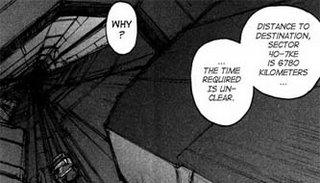
Even the large storage room the size of Jupiter would have been a long, long walk (although the elevator ride up would have been much, much higher.

It is not known how much time Killy takes in traversing the levels between chapters 1 and around 7, before he meets Cibo. It could have taken him centuries before he reached Cibo’s level.

For civilizations to have developed at that level independently also takes time, and countless generations of people and memory would have evolved since then.

Memetic Degradation

With time, all memory fades. Like the Net Terminal Genes, the Memes of the Characters of Blame! also degrade over time. The first chapter of the manga is quite telling. Killy and the person with the dog (who we now know is Iko from an earlier age) do not know what a book is, much less what the “Earth” is. With the passage from time and mankind’s alienation from Earth, it seems that people have lost the memory of what Earth is.
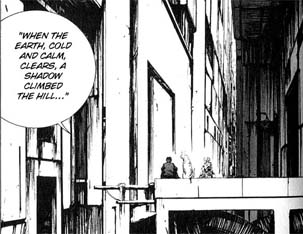
Another form of Memetic degradation stems from the admission from some of the other human sub-races that they have lost the ability to read languages, simply because their ancestors had no need for the old language or they developed one on their own. From memetic degradation comes a reset of sorts, leading to the creation of new cultures. The Fishers have forgotten the purpose of Toha Heavy Industries (it was a ship carrying immigrants to space) after having lived outside for so long and have established their own culture. Also, there are no Fishers alive with the knowledge on how to make their weapons (probably carried over from the Planters)

It’s possible that after being separated, the Fishers went into a mode of pure survival, where their previous knowledge slowly died out after generations. When they were self sufficient enough to snap out of that mode, it was too late – their memes had already degenerated.

Only persistent memes remain strong; those that aren’t, and are not connected to tradition (in contrast to how the African Bushmen or any other ancestral tribe manages to keep traditions alive even by word of mouth) pass into legend, then obscurity, then memetic destruction.


Transcendence

Cibo is one of the most interesting characters in the series. She changes form and goes from body to body as the series goes on.

One can ask, even in the beginning the Cibo we know in the series was just backup data compared to the actual Cibo who conducted the Artificial Net Terminal Gene experiment. Is she the ‘real’ Cibo? Is the Cibo in Sanakan’s body still Cibo or a new being? What defines one’s ‘self’ in the world of Blame? How will physical bodies be of importance in this world? If one accesses the Netsphere, what will happen to that body?

Physical reality like ours and the 'reality of data' in Blame is still technologically far away, but in the future, who knows? We might find the secret to near immortality one day.


Living On

In closing, one of the essences of Blame! was the drive of humanity to propagate itself, to survive even in a cold and unfeeling world. All of the characters in the series were fighting for their own survival. For that, the Silicon Creatures sought Chaos, Cibo wanted escape. The Governing Agency wanted order. Who would survive till the end? Who will prevail? You'll have to read the manga to find out...

Friday, January 05, 2007

Ye shall be as gods, part I


A few years ago I picked up what would be my first Playstation RPG. Most people would tell you that for their first experience, they played one of the three Final Fantasies in the system, most likely FFVII or FFVIII. I however didn’t get to play this on the Playstation at all (I played both FFVII and FFVIII on the PC, so it really doesn’t count.)

It was a game called Xenogears. I had heard of the game before, but I had no idea what I was getting into. Soon I would be knee deep in what would be one of the best RPG experiences in recent memory.

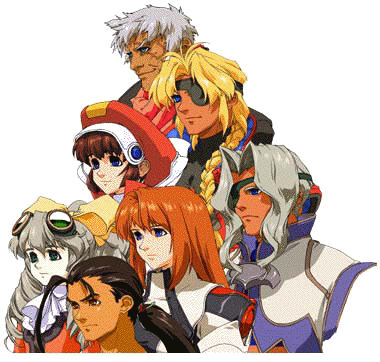
The main draw of this game is the overly complex, multilayered story. When viewing the opening sequence, once you get into the game you wonder what the hell does this have to do with the story – soon, however, things get very clear. At first I was introduced to a conflict between two nations – Kislev and Aveh. Our protagonist, Fei Fong Wong, is a humble painter living in a quiet little town named Lahan. He has little idea of the things going on in the outside, and he couldn’t care less. But a series of fateful events would drag him into something much, much bigger than anyone would ever think. He would tap on an ancient mystery, a conspiracy lasting thousands upon thousands of years.

Once the story goes on, we are literally drawn into the world of Xenogears. Playtime usually takes 60-70 hours. I personally took 100+ hours to finish everything, a record matched only by Final Fantasy VII. And this is a game made on only two CDs – compare this to the sprawling epic RPGs that are 4 CDs long – and take only 50-60 hours to complete. Aside from the normal battles, the game also has extensive sections concentrating on Gears, large mechanical robots capable of dishing out huge amounts of damage. And even then, there is a level of strategy within the game regarding these Gear battles – they rely on fuel to work – and with only a limited supply of fuel, one has only so far to go in a dungeon before fuel runs out, thus battles must be fast and efficient.

The characters of Xenogears are memorable. Most of the characters, whether major or minor, each have their own issues, and are likeable or hateable in that respect. From Fei’s trusted companion Citan Uzuki to the Demon of Elru, each has their own quirks and qualities that make them memorable.

Xenogears delves into territories other RPGs shy away from. Existentialism, violence, the examination of one’s psyche, and some sex and violence are all thrown into the mix. Various references to Jewish and Christian mysticism are present, as well as references to various pieces of Science Fiction.

The game does have a few caveats. The gameplay changes drastically on the second disc, and certain secret materials suggest that the game was unfinished when it was released in stores – and that it may have been much longer had it been finished. Most players may be turned off at the way the plot is unfurled at this point, where conventional storytelling is replaced by a series of internal monologues with a dungeon inserted in between.

Even so, Xenogears is a rare gem in RPGs. It remains an RPG that will forever be the subject of debate between lovers and haters of the series for years to come.

Sunday, August 27, 2006

Taking Candy From Strangers

The Japanese had a word for it. Although I've forgotten the original word, it's translated as "Irrestistible Attraction." It was used to describe the feeling Japanese salarymen have towards young teenage schoolgirls. It's not just in Japan that the phenomenon happens. Everywhere in the world men are attracted to youth and beauty.

I had reservations seeing this film. I had heard it from some time ago and wondered how the issues that the film was going to tackle would be addressed. Well, after watching Hard Candy, a film from music video director David Slade, now I know.

The movie begins and we are treated to a meeting between two people, orchestrated in an internet chat room: a 32-year old photographer named Jeff (Patrick Wilson, Phantom of the Opera) and a 14-year old teen named Hayley (Ellen Page, X-Men 3, in what is probably one of her best roles yet) meet. The man looks at the girl with a gaze I found disturbing; she innocently eats chocolate cake and he tastes some of the icing on her lips with his finger. After the initial exchange we see the visual metaphors coming: Hayley with her red jacket and hood, much like a Little Red Riding Hood, and our photographer, a wolf. Predator and prey.

At first we see Hayley as a nervous, talkative teenager. She's shy and seemingly naive. But soon we see a change in her as the movie goes on. The predator-prey roles are reversed. And slowly, the layers that cover Jeff's true nature are revealed, one by one, in painful scene after painful scene. Here is where the division in reactions to the movie are divided.

Who do we sympathize with, if at all? Can we justify the actions taken in this film? Is there any sense of realism in this film at all?

I was surprised to learn that many people, after watching the movie, sympathised with Jeff more, even though we know that somewhere, somehow, although its true nature is never conclusively revealed in the movie, that he did something bad. To them it's a question of how far Hayley went with what she did, and how 'realistic' it was for them. To me Hayley, with her one-dimensionality, is not a real person or character; instead, she is a representation, a driving force of nature. In her own words, she is everyone who Jeff has exploited in the past. We cannot judge her because we know so little about her; indeed, I doubt if she even spoke one true thing about herself at all, even if Hayley is really her true name. She is only an instrument that reveals Jeff - she is like a magnifying glass exposing every aspect of that man.

The film itself may be classified by some to BE exploitation, with its psychological violence and harrowing scenes. To his credit, the director and the actors involved made it so that we sympathize with a character that is by all means, despicable. Throughout the movie, as Jeff is broken down more and more, and as we see the ugly facets of his true nature, we still pity him. He makes attempt after desperate attempt to save himself - all of the begging and pleading and groveling was for HIS sake, and no other, even when he says he is thinking for her sake. We view him as the victim when he is actually the victimizer - and that, in the end, makes me reflect about our own nature. Who are we to judge?

Tuesday, July 25, 2006

The Present Confusion Rainy Day Marathon

Capsule reviews of movies I’ve seen over the extended weekend:

Jailbreakers: What can you expect from the guy who directed Attack the Gas Station? Expect large, wild crowded fight scenes, slapstick comedy and sideplots aplenty. It’s totally hilarious and crazy, and exactly something that you’d expect from Korean Comedy. And although it may not be entirely serious, subtle social commentary is in the film for extra measure. How about that?

Public Enemy 2: staple good guy versus bad guy spiel with a “cerebral” twist to it (and I stress the quotation marks.) No stalking serial killers here like in the first film. Somewhat overlong, but still enjoyable to an extent. Despite the film’s flaws and disjointedness, you gotta enjoy Sol Kyung-gu, he’s still a great actor.

Marrying the Mafia 2: Aww, a gangster with a heart. MTM2 is even cheesier than I’d expected, and cheesier than the first film. There are some great comedic moments in this film, however. Just for those moments it’s worth watching at least once, on a rainy day.

Five Tough Guys: Shaw Brothers goodness! This guy wants to overthrow the emperor and he needs to go to Yunan province. So he hires five bodyguards to escort him. That’s it. There are some police and Japanese guys for villains FTW. Great chopsocky action.

Inu no Eiga (Dog Movie) : the title says it all – it’s a movie about dogs. It’s more or less a collection of short films, most centered on a boy (later a man) and his dog, with a few exceptions. Some are hilarious (the commercial segment and the dog in love sequence,) heartbreaking (the hospital sequence,) plain weird, (the second animated sequence and the dog talk thing) and some are just plain. But all the preceding segments are eclipsed by the brilliant last sequence starring the lovely Aoi Miyazaki, which is well worth the price of admission (or rental, or whatever.) For Dog Lovers everywhere.

Short Time: this was a movie that surprised me. It’s a Korean Comedy, and it’s funny. But the whole thing at the end made it a bit different from other Korean Comedy offerings out there. It has no big name stars but it’s quite a surprise, like last year’s “Where is the Tape?” It’s no art film masterpiece, but it’s entertaining fluff that entertained me through the rain.

One Nite in Mongkok: It’s HK gritty crime drama at its best. It’s near Christmas. Two gangs are fighting. One gang hires a killer to kill the leader of the other gang. Shit hits the fan, the killer is suddenly on the run from police, stuff happens. At first a land of opportunity, the streets of Mongkok soon become deadly. Although the last 10 or so seconds are unintentionally funny, the rest of the film is brilliantly shot and the plot is played through to the end. And also, the film has Cecilia Cheung. You can’t get enough of Cecilia Cheung.

Friday, July 07, 2006

Just One More Happy Little Tree


I sucked at Art Class.

It was one of the few subjects I was scared of failing. I was never keen on the whole arts and crafts thing. I colored outside the lines, I cut paper as if my pair of scissors were made of the dullest substance known to man. It wasn't Math or Science or even Filipino that bothered me, it was Art. I had projects made by someone else for a good while, just so that the rest of the world will never know my general suckiness at making something arty. The teachers berated me for it. They gave me bad grades in the subject, just enough to get something decent.

Now that doesn't mean I didn't love to draw. I loved drawing and making little comics from yellow pad paper. I liked drawing little nipa huts and I used up endless notebooks with my drawings of them and stick figures with lasers and spaceships. The thing is it just wasn't what the art teachers wanted. They wanted something else.

It had gotten so bad that I had to take summer classes in art. ART, for crying out loud. I wanted the simple course, but for some reason I was included in the advanced class, which mainly composed of painting things. Now this was clearly a case of being completely out of place - while I was there I was surrounded by people who had at least twice my skill in making arty things. I had no chance whatsoever against these guys.

At the same time, I watched an show on TV called the Joy of Painting. It was hosted by an afro-sporting, soft talking guy who had a knack of smacking his paintbrush against the thing that held up his canvas. His name was Bob Ross.

I watched the guy turn a perfectly blank white (and in one instance, black) canvas into something absolutely gorgeous. The man did nothing but landscapes - mountains and cabins and forest scenery and black vistas of imagination-fueled splendour - all in 30 minutes or less.

I wanted to do that, I thought. I wanted to create mountains with color and erase trees on a whim. I wanted to know the Joy of Painting.

My first painting in the advanced class was not that good. It was a grassy landscape, or maybe it was fruit. In any case, it was terrible, unless you considered it abstract art. I copied how the others painted and tried to get tips from them. It didn't work that well either.

For my last painting it was do or die, so I asked my teacher how to make all those pretty effects. He taught me how to do an ocean with a black sky. It really kicked ass, although he did a good part of the painting too. Eventually it was all shown at an exhibit in my school. I was a bit proud. For the first time I loved making something out of my own hands. It was joy.

I haven't done a lot of that since then, but drawing's become my outlet sometimes. I consider it my release, as my classmate once asked me. And I go back to that summer when I tried to make mountains out of paint every time I begin drawing. That guy taught me that art could be fun, more than any cynical art teacher ever managed to elicit from me.

Then, before I decided to write this, I found out that Bob Ross has been dead for eleven years. Apparently he died of Lymphoma in 1995, having entertained and taught millions of people everywhere the same thing I learned from him. Man, that was a shock to me. He was a cool guy. But I'm sure many other people have had the same experience as I did, and I'm sure those 30-minute quickies of his will last a very long time.

Here's to you, man.


Sunday, June 18, 2006

A Fighter’s Craft

It was the early nineties, I remember. My cousin and I were in an arcade in Tagaytay. After a successful run of X-men the Arcade Game, burning a few hundred pesos worth of tokens in the process, he was playing Street Fighter II Turbo, still considered one of the greatest fighting games of all time. As he waded through single player mode, another person approached him.

I think he used Ken. Soon my cousin was in a one-on-one fight against him. Seconds passed and I knew that he stood no chance against this stranger. Because of his win, the stranger played Single Player mode while my cousin left his place.

A strange feeling passed over me then. I felt I needed to do something – it was the kind of urgent feeling you get when you wanted something really bad.

I had to defeat this guy.

I stepped up to the arcade station and challenged him. At the time I had never challenged anyone before in any videogame in public, ever. This was my first time. I used Dhalsim, for that was the only character I knew. The match started.

Before I could realize it, adrenaline pumped through my veins as I started pushing buttons. Although it scared me, I found it quite exhilarating. Soon I found myself winning the match. It took all of thirty seconds. I completed the single player mode and went on my jolly way.

A strange feeling poured over me as I walked away from the machine. It was the feeling of victory – something rare and alien to me at the time.

That was my first experience with a fighting game.

In this computer-driven age, the gentlemanly duels of ages past have been replaced with something more convenient – the fighting game. Instead of rapiers or guns or katana we have controllers or fighting sticks – each one with their own personal feel. I get this feeling all the time – my current controller, as defective and as battered as it is, will always be my fighting controller, despite the fact that I’ve wrapped toilet paper around the analog sticks to prevent it from breaking into a gazillion pieces. The place of dueling – the local arcade, or anywhere with a decent TV and a console. And at least, a loser walks away from a match from a fighting game with only a bruised ego, instead of an ear, a nose (like Tycho Brahe,) or his life.

While the image you probably get when you see ‘fighting game’ involves two digitized characters beating the crap out of each other, I see it in the context of a ‘versus’ game – something that involves one person fighting against another in a game of skill. Be it a game of hockey, billiards, basketball or even tetris, it is a fight, a battle. Thus, the term fighting game. When playing against the computer, one can decipher its strategies and make a decent strategy to counter perceived weaknesses. With a human player it’s different. People adapt and try new strategies, plus they’re unpredictable. It’s the ultimate challenge.

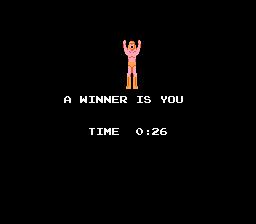
It went way back to the first few videogames in the fifties and sixties. Even then the first games weren’t something you’d play singly, it was a versus game – tic tac toe to be exact. Then there was Pong, which is basically a computerized form of tennis. People flocked to it in droves, creating a craze and, ultimately an industry. There was Yie-ar Kung Fu back then for the NES. Then came the Street Fighter Series. The concept of combos, multiple attacks strung together, was born. From 2D the fighting progressed to 3D. The nature of attacks evolved, and the strategy of fighting became a precise art. For some games knowing the frame speed of different moves can determine whether one wins or not.

I went to the local PS2 rental facility and found many people playing games that involved a versus component in one way or another. One fellow powerbombed his young friend in a wrestling match; in another station, a girl was throwing haymakers at her boyfriend in a boxing match. You could see the enjoyment in their faces, the exhilaration. It’s hard to describe.

After that one experience in Tagaytay I never got to play a decent fighting game against a friend or stranger in years. Years passed, then college rolled by. It was our first week, and with a three hour break we decided to head to the local arcade at the mall.

I discovered Soul Calibur.

Soul Calibur, (then the latest game of the Soul series) was a weapon based 3D fighter in the mold of old Playstation games like Toshinden, taken to the next level. Even now it is considered one of the greatest 3D fighters of all time; many look to the excellent gameplay and balance the game had to offer. The best version next to the Arcade Version, arguably, was the Dreamcast version, and it was one of the reasons to buy a Dreamcast. I was drawn to the game immediately and started playing. At first one could finish the game with simple moves, but it was clear that against people you wouldn’t go anywhere with just simple moves. I first faced my classmate, a veteran of fighting games who played Tekken Tag quite well. Even though it was his first time, he had instinct, and he managed to beat me using his character. Yes, I thought, simple moves would not be enough. I would have to move with my character, make his movements an extension of my own, his mind one with mine.

To beat a skilled person takes technical skill, reflexes and fighting instinct. The first two are easily attainable by practice, but the third takes something else entirely. For the third, you need experience. That’s built up by fighting countless battles with someone else – and not just one person, it has to be different people, to absorb as many fighting styles as you can. And so I battled against total strangers. Students, employees, mall janitors, anyone I could get my hands on. I won a few, and I lost a few. Sometimes I would lose all the time. But I would take it in stride and be happy that I managed to fight someone strong.

I met a couple of people that seemed too intimidating to fight: the bespectacled student that intentionally lost matches to get the most of his six peso token; the Court of Appeals employee who used his characters like a virtuoso, the random person who you know is top tier from the way he mixes up his moves.

One day I was in SM City, playing by myself. Suddenly the challenge screen appeared; someone had decided to challenge me. He was very good and managed to win against me consistently. I would win a couple of matches but never one whole set. I did everything I could to no avail, spending most of my tokens. I was not disheartened by my constant losses… I felt exhilaration. I was genuinely happy that someone this skilled was fighting me. Then, eventually, I won a set. That player never returned. It was one of the greatest feelings ever. Even if I hadn’t won that set I would have been pretty impressed anyway. It wasn’t the victory or loss that was important, it was the idea of having to fight someone really strong. I wonder if warriors of old thought of the same things. I wonder if they, lying cold, bruised or dying under the rain after a mutual duel, resigned themselves to death knowing that they were beaten by someone strong.

Afterwards I learned the power of strategy. Before my style was increasingly aggressive - I merely tried to get as many hits in as possible, and hope that I caused more damage than the other guy. But then I learned how to play defensively. I started blocking, waiting for an opening to attack. I learned how to run away and evade attacks. It made me think before I attacked - and that improved my game drastically.

Alas, like all things, we move on. Since then I’ve moved on to other games, and I've met a lot of good friends through them. I’ve learned a lot of things while playing, and not just about the fighting game itself. In the game of life, I’m decidedly mid-tier – but the tokens in this game are endless, and I’m happy for the challenge.

Wednesday, June 07, 2006

One Year of Insanity!


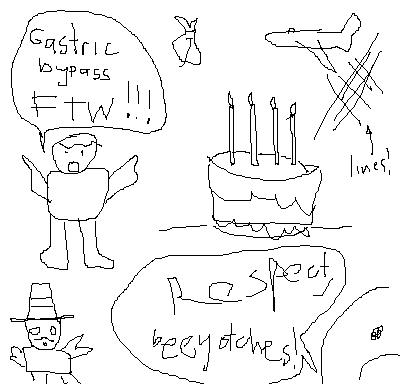
Don’t mind the title image. Consider it a representation of my feelings. Yeah, guys in top hats and H-bombs (yes that is an H bomb in the upper part of the picture) represent my feelings. Go figure.

One year! Wow, I didn’t expect this blog to go on for so long. Well then. Enough of my rambling, enjoy the picture.

Oh, and happy anniversary.

The Power of Rock and Roll

Little did I know that upon watching the first episode of an anime series called Beck (no relation to the singer of the same name) that I would get hooked on it and consider it one of my favorite anime series of the year. Beck is an anime about a group of guys who decide to form a band, kind of like Gravitation without all the bishounen. In a way it is Anime’s tribute to Rock.

At the beginning of the series Yukio Tanaka, who is called Koyuki by his friends, is a timid middle schooler. He isn’t particularly talented in anything; he isn’t athletic nor is he inclined towards any hobbies. His nights comprise of listening to the latest J-pop Idol singing about how everything’s going to be okay. He has a crush on his old childhood friend Izumi, and lately she’s been playing a larger role in his life. One day she lets him listen to the (fictional) band Dying Breed. This isn’t the music he’s accustomed to, and he’s intrigued. After meeting a guitarist named Ryusuke, he soon begins traversing the path onto becoming a rock musician and becoming .

The anime, like most other series about a certain topic, focuses on its many aspects, in this case, the aspects of rock music and becoming a rock musician – learning the guitar, hearing other bands, performing a live gig. Various references are made to famous luminaries of rock – Lennon, Cobain, The Lizard King and so on (a panorama of personalities from the local and international rock scene even appears during the end credits.) This anime is bilingual – English and Japanese, so expect the occasional line of English dialogue to pop up (and this doesn’t even include the songs, more on that later)

Beck is also a slice of life story – focusing on the different aspects of Koyuki’s life and how he deals with the people around him. I liked the romance angle that pops up every now and then, and Beck does it in a refreshing way – without all the cuteness and/or ecchiness that seems to work its way into other anime (unless you take into consideration that one scene in the swimming pool...)

Being an anime about a band, naturally the series has its own music. Many songs from Japanese indie rock and some other classic rock songs appear too, including an appearance by the Pillows, who we know better from the Gainax anime FLCL.

“Moon on the Water,” Beck’s love theme, has got to be one of the best sounding songs I’ve heard in an anime for a long time. Sung by either Koyuki’s singing voice actor or by J-pop artist Sowelu, it’s a cool rock ballad that is catchy and managed to keep me on LSS mode for a long time. However, here’s where the problem arises: most of Beck’s songs are in English, and apparently whoever wrote the lyrics did so in Engrish. While some of the other singers on the show have no problem singing it, it sounds really awkward to the native English speaker (I wonder why they didn’t just have Yoko Kanno staple Tim Jensen do the lyrics… he did the ending song after all.) It’s up to the viewer to accept the music and not concentrate on the lyrics or not. Having listened to my fair share of good-sounding-but-strangely-worded songs, I forgave the music and enjoyed it for what it was.

Another thing about the music is that we hear little of it before we cut to the next scene, and some of the songs are sung almost every episode. I can’t tell you how many times I heard ‘Typhoon 20! 20 Chiba! 24/7!’ then have the thing cut to the next scene… only to hear the same thing in the next episode. I mean, show me the rest of the song! Grrrr. Anime Soundtrack Marketing people at work, I guess.

One point that many fans seem to have a problem with is the ending. Like many anime series, Beck stops while the Manga continues. While the show could have stopped at episode 25 (IMO, a great resolution to the series) episode 26 tries hard to cram 3 volumes worth of manga story into one episode (actually ten minutes or so!) I don’t mind the way the director wanted to end the anime, but the extremely fast pace of the ending scenes may turn off some.

In closing, I left Beck still loving it, despite its flaws. It almost made me want to make music myself. It’s a quirky, fun anime that I won’t hesitate recommending. Maybe soon you’ll be singing along to Moon on the Water too…

Tuesday, June 06, 2006

Failan

The theme of lovers separated by distance, physical or otherwise, has been tackled again and again since the beginning of cinema. In Asian Film, recently there's been Korea's Calla, Il Mare and Ditto, Shunji Iwai's Love Letter (one of my favorite movies) the Ken Zhu starrer Sky of Love and the the recent Filipino offering Moments of Love.

Failan, a kind of Chinese-Korean joint venture, tackles the concept, but ends up becoming something far different from the above. At first what seems like a Korean gangster movie turns into a touching character piece about a man on the edge of his life facing (and ultimately, regretting) the choices he has made. I won't cut corners and tell you that you will find the content emotionally affecting; bring box of kleenex or two, you may need it. This film is no commonplace tearjerker, this is perhaps one of the greater films of the past few years.

Since enjoyment and analysis of the movie kinda depends on the story, Spoilers follow. You've been warned.

Despite the title, we are first introduced to Lee Kangjae (Choi Minshik, delivering a brilliant performance, as always), a low level gangster relegated to inane tasks like extorting store owners or hocking porn. He's been a gangster for some time now, but he's still the rank he is while his other friends have become bosses, and his supposed subordinates treat him with no respect. He acts tough but is all talk; in truth he doesn't have the heart of a gangster. This goes on for half an hour, portraying a dark and seedy world that is harsh and unforgiving. This section of the film portrays Kangjae in an unflattering light, and we, the audience think of him in a negative way.

One day something really bad happens, and he is given the choice to take the rap for his gangster boss friend in exchange for something that he's always wanted. However, before the time comes, he is told that his 'wife,' Failan has just died.

Here we are introduced to Failan, played by Cecilia Cheung (recently of the Promise, here in a rare at the time crossover), a gentle, kind woman who came to Korea to search for her relatives. The search does not end up as expected, and she ends up working as a laundry woman under a paper marriage - to Kangjae. Although Kangjae is her husband only on paper (and true to his character, Kangjae forgets the whole thing later,) his simple act matters much to Failan, and treasures the only thing he left her - his picture and his red scarf (ironically, something that Kangjae had shunned because the color didn't look good on him.) Here the tone of the movie changes significantly, and as Kangjae goes to where his wife finally rests, he grows more and more attached to the one person who had seen him, acknowledged him as a person. Here we begin to rethink our perception of Kangjae, we pity him for his unfortunate situation, of a possibility of something that will now never happen.

Separated by distance, we could speculate that perhaps Failan was only in love with a mere perception of Kangjae; we know better, after having seen the first part of the film. But what if she really did see something special in this seemingly worthless man that so many others had neglected? To me it seems like a vicious cycle - from the people around Kangjae who spurned him, to Kangjae himself initially thinking little of Failan and forgetting about her. Failan, who is pure and saintly, never thinks of her spouse negatively, even when he virtually never sees her alive except for one time.

It sounds implausible, I know; falling in love with an idealization. But we have crushes all the time - to become infatuated with someone that we do not truly understand. I think when we do so, we see the best in people, beneath the surface, into something that other people do not see. And this realization, in my opinion, is what drives Kangjae closer to Failan (in this case, his idealization of her - and in our case, we know how she is.)

The climax and denouement of the film is heart-rending as the pieces fall into place. I knew that the end was inevitable, and Failan's song at the end is haunting. I personally could not stop watching the film as the credits rolled, and even as the film had stopped.

The acting in the movie is superb. It goes without mention that Choi Minshik is one of Korea's most talented actors. He radiates his emotions, his every movement and action flowing with sorrow, almost like Takeshi Kitano, whose deadpan face still communicates emotion even when it's... deadpan. Cecilia Cheung does a good job as Failan, although her character could have used more development. The music suits the occasion well, and the technically the film succeeds well.

In the end, I prefer to think that Kangjae had been saved; for a brief moment in his life, someone had seen something in him that even he may not have noticed. Failan is an unforgettable film that makes you think about the little things in life that you may take for granted.

Monday, May 29, 2006

Hardcore!

Just some random stuff I noticed while watching Sentai shows…

There was an episode of Shaider that was focused on Annie (no, she didn’t star in porn, as far as I know. She did, however, continue acting in Sentai well into the 90’s.) There was a part where she fought these evil minions and she was dressed up in Geisha attire and had Geisha makeup. To her credit, she looked like the real deal. This was in itself normal, despite the fact that millions of Filipino kids probably wouldn’t be able to get the cultural connection.

However, in the second half of the show she goes into this weird routine where she changes costumes every 15 seconds. She doesn’t fight per se; the routine seemed only to confuse the hell out of everyone there. It was pointless and utterly weird, and made me wonder what the hell the director was smoking. Did the Japanese kids who saw this in the early 80’s laugh at this? (they probably did.) Would the scene be appreciated by the generations of Filipino kids who watched this?

The episode dealt with kids getting evil by means of evil clothes. EVIL CLOTHES, ZOMG. No wonder that face thingy with the weird song and dance number lost. Why not make evil business suits for world leaders or something? That way he can rule the world. BUT NO. Instead, he makes these little detours and give the suits to freaking little kids, so that they may beat up the friendly veterinarian down the street. I’m surprised Shaider hasn’t kicked this guy’s ass already. Wait, he doesn’t have an ass. Scratch that.

In fairness to the episode, this was one of the few episodes where Babylos turns into a robot instead of a wimpy stupid gun. I hated that freaking gun thing. So that’s 130750 plus points for me.

Oh, and I guess the guy who played Shaider really did die. To all those people I told that Shaider may still be alive, he isn’t. Sorry.

Power Rangers is the subject of the next topic. I don’t know how many incarnations there are right now of the franchise. Sooner or later they’re going do silly ideas and make them Pirates and put them on a giant space ship that looks like a 16th century galleon. Heck, they made them ninjas in one show, why the hell not. The rest of what I’m going to tell you is true. No lie. Well, maybe a little.

Anyway, there was this one show with one of the Power Rangers, still in civilian attire, escapes from this generic building. So all is fine and good when this Tyrannosaurus Rex comes in. Well it’s a carnivorous two-legged dinosaur anyway, if it isn’t a T-Rex. So naturally what would one do? We all watched Jurassic Park, right? Wouldn’t the first reaction be to either a) stare in silence and fear as the giant m*********** bites your torso off, or b) run like hell until the said dinosaur bites your torso off? Either way, torsos are going to fly.

BUT NO. Instead, the Power Ranger, without even transforming, ROUNDHOUSE KICKS THE DINOSAUR IN THE FACE.

HOLY SHIT.

The dinosaur flinches and the Power Ranger makes a getaway. But you don’t care about the rest of the show, you’re still stymied that some Joe had the balls to ROUNDHOUSE KICK AN FUCKING DINOSAUR IN THE FUCKING FACE. That’s just genius. Chuck Norris would be proud. Well, in fact, Chuck Norris once went back in time and roundhouse kicked a dinosaur so hard it reached escape velocity and fell into the sun. Along the way, the space borne dinosaur collided with an asteroid and changed its course so that it would strike the earth, killing all the other dinosaurs. That’s right; Chuck Norris caused the extinction of the dinosaurs.

…Hardcore.

Sunday, April 23, 2006

C and J at the movies: Pamahiin

Last Thursday my friend C and I went to see a movie, not knowing that the choices were mainly a) things we had either seen before, b) didn’t want to see or c) a film by/with Steven Seagal. We were stumped. Eventually we went to watch something in the b category, a recent Filipino horror film called Pamahiin (in fairness to good ol’ Steve, we considered watching his movie… for about five seconds.) Instead of the usual review here are some of the things we said during the course of the film (more me than him, but anyway…) Was it a fun experience? Yes, it probably was. Was it a good film? We’ll let you decide. Some of the stuff was spoken in Tagalog and may not be verbatim. Remember, THIS IS SUPPOSED TO BE A HORROR MOVIE. A MOVIE THAT IS SUPPOSED TO BE SCARY AS HELL.

(Five or so minutes into the movie)

J: Uy, puro pamahiin to ah… jinu-justify ata nila yung title eh. Kulang na lang me ladder sa tabi, tapos me black cat…

(A black cat darts into view)

J: …

* * *

(A character (Iya Villania, as Eileen) locks herself inside a room as someone chases her)

J: Why can’t (the pursuer) open the door? The keyhole is in (Iya’s character’s) side of the door (thus the lock has to be at the other side where the pursuer is)

C: Maybe it’s one of those locks where you push the middle of the doorknob to lock the door.

J: In the side with the Keyhole?

C: …

* * *

(A heart used for an evil ritual continues to beat)

J: I wonder how much that heart was in the market?

C: It looks clean nga eh.

J: (Evil character’s name) must have used a lot of Ringer’s solution…

* * *

(Iya’s character sees a ghost)

J: *imitates Iya Villania by opening his mouth really wide.*

C: …

J: Ginagaya ko lang, no… di kaya kinabag siya dito?

* * *

(Some jump scenes occur)

C: Some traumatic shit, paaare!

J: *laughing*

* * *

(a wall crawling scene occurs)

C: #&)!

J: Nice effects ah!


* * *

(A major SFX scene appears where the ghost is disappearing)

C: Hmmm…

J: YEAH! LENS FLARE!!!11

* * *

(A character, Mang Sebring, goes apeshit crazy after learning a piece of news)

J: Best actor, pare.

C: Ha?

* * *

(The same character is killed by a pane of glass)

C: Hirap naming paniwalaan yun. Ang layo niya dun sa gilid…

J: Oo nga… pahalang pa yung glass… unless he was chopped in two or something.

C: Dapat flat (reminded me of a scene in Final Destination 2…)

J: Oo, para madaganan ng mabuti…

* * *

(At seeing Paolo Contis character commit suicide)

J: Si Paolo Contis ba yun?

C: Oo.

J: Iba itsura niya… Must be the eyeliner.

* * *

(Words written in blood appear in front of the character)

J: Ang ganda ng font ah! Parang sulat babae.

C: Oo nga eh.

J: Yung a, diba, iba yung pagkasulat.

* * *

(Iya cries and acts terrified during a scene)

J: (indifferent to the scene) Shiny hair! Kintab ng buhok niya ha…

C: Akin yan, pare.

J: Ang cute, ang sarap hawa… este yakapin. Pero bakit yung hair niya palaging natatakpan ang mukha niya?

C: Yung hairstyle niya.

J: Hehe, tawagin natin ang hairstylist niya.


* * *

(Iya breathes heavily during a scene, simulating terror)

J *imitates*

C: Ano ba yang ginagawa mo?

J: Parang me tonic-clonic seizure (I was thinking more of kussmaul respiration later on, but this was the first thing that came to my head)

J: Nano-notice mo ba gumagalaw ang hair niya habang humihinga siya. Gaan ng hair nya, no? Anong shampoo kaya ang ginamit niya?


* * *


(blood drips down onto Iya’s face)

J: Chocolate!


* * *

(A scene transition occurs and Iya is shown talking to the phone explaining exactly why they are there and what they are doing)

J: How convenient! Exposition!

C: Para ma-explain…

J: Para sa masa siguro to no? Bait naman ng director.

(the same expository device is used later on in the movie)


* * *


(A scene occurs where the two characters lock themselves inside the house)

J: Cliché naman… teka, sungka ba yon?

C: Hindi ha. Ano yung ilaw na yon? (referring to a light outside the house)

J: May ilaw sila sa labas ng bahay. Aksaya naman sa kuryente ng mga to…

* * *

(A character leaves the car)

J: Sige, magpa-carnap ka…

C: Nasa loob na yata sila ng bahay eh.

J: (embarrassed) Ows?

* * *

(A character tells Dennis Trillo or whoever he is that Iya’s character is in the shower.)

J: Yesssss! SHOWER SCENE! SHOWER SCENE NA TOOOOHHHH!

C: … gago.

There. In my honest opinion this movie comes out as an awkwardly plotted, awkwardly paced, awkwardly edited, awkwardly acted B-movie grade film. The effects range from artificial-looking to good (at one point my friend couldn’t tell that a CG effect was in fact not real.) We don’t need continuous emphasis that this film is about Pamahiin (folk beliefs) in the first third only to abandon that and go into some weird ghost story that has something to do with witchcraft. Iya was cute, though, and whoever maintains her hair deserves praise.

But my friend seemed genuinely surprised by some of the jump scares. They don’t have the same power over me as they once had, seeing that I’ve seen the best of em. I guess there were a few good moments that could have scared me. Maybe. In a million years.

Otherwise, unless you’re willing to MST this movie to death, don’t see it.

Monday, April 17, 2006

The First Step

Boxing… it’s a strange thing. I find myself strangely attracted to this science, this art, that basically entails beating someone to a bloody pulp. There’s something about the glory, the rush it gives when you are giving all you have to someone else, one on one, in the field of battle.


What does it mean to be strong? This is the question that is the center of the anime series Hajime no Ippo, a.k.a. Fighting Spirit, a.k.a. Knock Out. It is a boxing anime to the core, and there aren’t that many (Ashita no Joe comes to mind, and that was a good one) But still I rank this show as one of my all time favorites.


Ippo Makunouchi starts the series as a timid highschooler who can’t help but get tormented with the local bullies. One day, after a particularly bad beating, Mamoru Takamura, a pro boxer, helps him out. Little do they both know that Ippo will begin the long and arduous road towards becoming a pro boxer himself. Soon the training begins, and the wise and experienced Coach Kamogawa sets Ippo up for his first matches. The road to becoming a Champion has begun.

My most favorite thing regarding this series was the fact that the fights were not seven-episode affairs that streeeeetched out a fight so long you don’t care about it anymore. Most of the fights take an episode or two – three tops. It improves the pace of the anime greatly and it makes it damn exciting, even when I’m watching matches I’ve already seen. In one case I already knew the outcome of one match, but when I saw Ippo go into his K.O. pattern, I got into it like a rabid dog. It’s that exciting.

The fast pulsing soundtrack helps as well as the voice acting. The opening and ending themes are quite good are quite catchy (who can forget ‘I want to feel lost mind?’) most notably the third ending theme, Saber Tiger’s “Eternal Loop,” which sounds like a 90’s rock band (And I geeeeeeeeeeeeeeet up, with my wounded baaaaahdeeey!) The characterization of most of the characters were spot on, and each person is given time to be fleshed out, even Ippo’s opponents. Ippo himself grows; as the series progresses, we see how he deals with the notion of how to become strong. The art style may put many off, but it’s understandable as the manga started out in 1989.

Sports anime have always piqued my interest, and Hajime no Ippo is one of the best, along with Slam Dunk. Give it a try and try not to get put off by the art style – it’s worth it.


The Blinding Passion

Some time ago, an anthropologist named Edvard Westermarck studied the phenomenon of people falling in love with people closely related to them. I guess there’s some credence in the old folks saying you will fall in love with a person who either looks like you or like someone related to you.

In one particular study, it was found that groups of children who were raised close together – in the close environment that siblings are raised, albeit without parents - grew up with little interest of members of the opposite sex. This type of reverse sexual imprinting – the Westermarck effect, it was called – was theorized to prevent closely related people, like siblings, from something called genetic sexual attraction, which would make them attracted to one another. (Remember when Luke Skywalker saw the holoimage of Princess Leia and said, ‘she’s beautiful!’? Something like that but more extreme.)

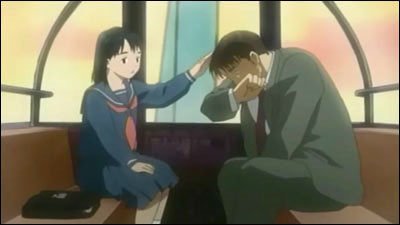
Whether you believe in that or the Freudian alternative, the anime series Koi Kaze (literally, ‘love wind’) is to me the example of a Westermarckian social experiment. Koshiro, a 27-year old man, is troubled by his listless life and the relationships he gets involved in aren’t ones that are fiery with desire – it almost seems like he isn’t attached to the people who forms relationships with him. His ex even asks him if he has ever truly fallen in love with someone (or something to that effect.) One day his younger sister Nanoka, 15 years his junior, enters his life. The two have not met ever since Nanoka was a baby, and here comes the dilemma: Koshiro, in addition to his natural fraternal feelings towards Nanoka, begins to feel something more, something deeper that at first he tries to deny. On the other hand, Nanoka is delighted at the prospect of living with a brother, since she’s wanted to have one all her life. Soon she becomes drawn in deeper in her thoughts of Koshiro, and something’s sure to happen.

Now I guess at this point you have an idea of what’s coming. Yes, that’s exactly what’s going to happen. Are you feeling creepy? Hehe. One’s appreciation of Koi Kaze will depend on your mileage. If you’re sensitive to these kinds of things, it’s best to stop now and go to my next entry. It’s probably as good as this one. Oh, and LOTS OF SPOILERS FOLLOW, so be warned.

LOTS OF SPOILERS FOLLOW! Just wanted to say it again...


Still here? Good. After seeing the entirety of the series, I cannot remove this anime series from my mind. I still feel ambivalent about the series, but I think it’s pretty good – one of the best I’ve seen this year. In essence, the plot of Koi Kaze is about two people who try to fall in love despite the circumstances that conspire against them – and we all know we have a lot of that. And yet there’s something sad about the whole thing that I couldn’t place. At times I can’t help but root for these two – the series was set up that way, even though Koshiro can be a jerk sometimes. And at the same time I find myself wanting their relationship to pass on gracefully, for everything to be like it should be (or, like what we would like it to be.)

The series is quite serious at times, although the lighter aspects of the series are quite cute. The simple art style is very nicely done, and it kind of accents the realism of the series somehow (and the realism is what sets the series apart from other romance series - it's really that good.) The soundtrack is really good, but nothing really exceptional or memorable in my opinion. It is interesting to see the interaction of the two main characters towards each other and each episode I couldn’t help but wonder: is it the time? Will they cross the logical and societal barrier that keeps them apart?

The last two episodes come, and they are the episodes that I am still personally wrestling with (of course, in a figurative manner.) Koshiro and Nanoka eventually cross the barrier, and enter the land of no return (really! Believe me, watch the last two episodes and judge for yourself.) Chidori (Koshiro’s coworker friend,) who seems to me a lone voice of reason, perhaps in this context embodying society itself, tries to stop them both.

But you see, as the title of this entry entails, love is a powerful blinding force. It’s a strange tunnel-vision like thing that makes you focus on that special person, and nothing else. In reality, one would see that this isn’t the most practical decision to make. But it is love, and I think the point of the whole series is that if love is there, anything has a possibility to last. And as you would expect from what I wrote, Chidori fails – and the two lovers cross the barrier, one that all lovers go through at some point in their relationship, but in this context unsettled me somewhat, and it’s natural, considering the way our society treats such relationships. It made me reflect on it, and that earns some praise from me. I hated what Koshiro did, honestly. It resounded against my very being. But then, I thought, how could I blame him? He's human just like the rest of us.

(As these two episodes went on I am reminded strangely of Kim Ki-duk’s Bad Guy (or any of his films, actually.) The feeling I got here was similar to the feeling I got when watching those films.)

I’m not as optimistic about love as the mangaka of Koi Kaze probably is. The anime ending kind of reflects that – it feels logical and grounded in reality. The last episode is full of symbolism. At one point, Nanoka even thinks about a lover’s suicide (something that is explained in detail in the manga, but this route has been done in Korean melodramas for ages now, so you probably know why.) They carve their names in a tree in the amusement park where they met, and yet we know that, since the park is shutting down, no one will probably see that. Koshiro even asks himself why they are doing this – they know this relationship may not last forever, it may only be temporary. They will have to make changes, try to hide what feelings they have from others. But for this short moment, they press on, because I believe that they are very sure of one thing – that RIGHT NOW, they are in love. I think the ending may imply that they've finally gotten out of it, that they can end and move on, or it may mean the opposite. It makes Koshiro’s final words – ‘I Love You’ – even more ambiguous. Is it a goodbye? Is it a heartfelt declaration of his feelings?

After seeing the anime ending, I went to see what the manga ending was. The manga ending is similar to the anime ending, yet I felt it was better in pacing the last few moments of the series. It isn’t as ambiguous as the last episode of the anime, however, and that last episode, like it or not, is one of its strong points.

In the end, aside from that, there is no real resolution aside from the fact that the two lovers have finally accepted their feelings. There is, and there isn’t change. Life goes on. I mean, you can’t erase that love that is already there. Tragic, yes. There could have been times where such a thing could have been avoided or stopped. Where do these two go from here? Hell if I know. Ultimately it's up to us to imagine. But as enjoyable and as distressing and as endearing and as unsettling as this series was, I wish both of them good luck.

Sunday, February 19, 2006

And so a month passes...

... and I'm back here again. A lot has happened since I last posted, and none of that had anything to do with anything unfortunate happening to me during Friday the 13th. Curiously, I always have a good day during Friday the 13th. Since I don't want to separate it again, let me go through it one subject at a time.

Narutimate Hero 3

A fighting game for the PS2. I thought it would wear out pretty quick but it's been surprisingly addictive. For a game like this to have 41 characters and have a surprising amount of balance and depth, while being fun at the same time is quite cool, in comparison to *other* fighting games that have a very unentertaining single player mode...

Vengeance Cake for Sale

I have finally finished Park Chan-wook's vengeance trilogy. So what do I have to say about the last installment of his trilogy, Sympathy for Lady Vengeance?

Well, I'll be coming up with something more comprehensive later, but for the moment, it's quite affecting and full of it's own brilliant and horrifying moments. It also approaches the subject of Vengeance in a different manner, and one can't help but feel something different with this movie in comparison to its other incarnations.

Your Friendly Neighborhood Homeroom Teacher

After a long time, I have finally seen all of the episodes of Gokusen, the TV Drama. It's hilarious and quite addictive. More on that later too.

The Death and the Strawberry

Been getting into Bleach as well. It's an anime/manga that sounds like Yu Yu Hakusho, but approaches the whole thing in a cool way. Episode 20 and counting...

Mixed Nuts

What is it with Japanese AV actresses of mixed heritage lately? They've been popping up everywhere. There are three main contenders: Nana, Maria Ozawa and Tina Yuzuki. I all honesty I like the last one, although in standard AV fashion all of them have mosaics. Nana is the most hardcore, however.

There. I hope I haven't bored you too much...